29 Nov, 2008

‘Tis the season for giving! In addition to the HP Magic Giveaway, we present 10 chances for you to win a Seagate FreeAgent external hard drive bundle. Winners will get their choice of either a FreeAgent Desk 1TB or FreeAgent Desk for Mac 1TB. AND your choice of a 500GB FreeAgent Go or 500GB FreeAgent Go for Mac portable drive.
The FreeAgent Desk, as its name implies, is intended for desktop use. Its 1TB (~1,000GB) capacity comes in a rainbow of colors, or a silver and white design to match the look and feel of a MacBook. The FreeAgent Go portable is much slimmer, and its 500 GB capacity is also available in your choice of 10 colors, or silver and white in the Mac version.
In addition to Geeks to Go, there are 9 other tech sites giving away bundles. Be sure to enter their contests for more chances to win! (Thanks to Xavier at Notebooks.com!)
Read the rest of this entry »
25 Nov, 2008
 Finding it a little more difficult to find the holiday magic this year? Still need something extra special for under the tree? HP and Microsoft have teamed up with 50 websites this holiday season to give away a total of $300,000 in prizes, in The HP Magic Giveaway. If you’ve done the math correctly, you already know that means we have a $6,000 prize package to award to one lucky winner. While the details of our contest won’t be revealed until later (subscribe to our feed), now we’ll share what’s contained in the prize package, and all 50 sites where you will have an opportunity to win!
If you’re new to this site, we share magical moments every day, by providing free tech help. Our magical moments come from helping someone solve a technology problem. It could be as simple as removing the Language Bar, or as complex as removing the latest rootkit that your antivirus missed. If you have some magic to share, or just want to learn more, please visit our forums.
The Holiday Magic Prize Package:
-
What’s included? It’s an impressive array HP of hardware. An awesome 25″ touchscreen desktop, a notebook with a huge 18″ screen, a 14″ entertainment notebook, and an ultra small and light, Mini1000 netbook with a 10″ screen. Plus a MediaSmart Connect that makes it easy to share media from a computer with your HDTV (photos, music, even HD video). HP accessories include a wireless All-in-One printer/scanner/copier, and a Photo Value Pak.
Microsoft wraps up the software with Windows Vista Ultimate, Windows Vista Home Premium, and Windows XP (Mini 1000). Microsoft Office Home and Student Edition 2007 (1 DVD w/ 3 licenses), and Microsoft Windows Live. Completing the package is Corel VideoStudio X2, and the movie Kung Fu Panda (2 widescreen DVDs; 1 Blu-ray disc).
Yes, one lucky winner takes it all, and there are 50 chances to win. To see all 50 participating sites, visit the official HP Magic site, or view the complete list after the break…
Read the rest of this entry »
16 Sep, 2008
On several occasions I’ve had the chance to talk directly with Pat Moorhead, Vice President of Marketing at AMD. He is a very genuine, and honest person. He’s the kind of person you’d like to have as a next-door neighbor. How many marketing people can you say that about?
Recently, he was asked his opinions about netbooks. What is a netbook? The Asus Eee was probably the first to claim this new category. These $300-500 notebooks occupy a category previously dominated by small and light $2,500 notebooks. These minimal 9-10” systems are mostly geared to access the Internet. However, they have serious compromises. Pat argues that while netbook prices have gone up, notebook prices have come down. Battery life of the netbooks also fails to meet expectations, as well as no optical drive, small screen, and very small or no hard drive. What do you think about Pat’s comments, and about netbooks?
28 Jul, 2008
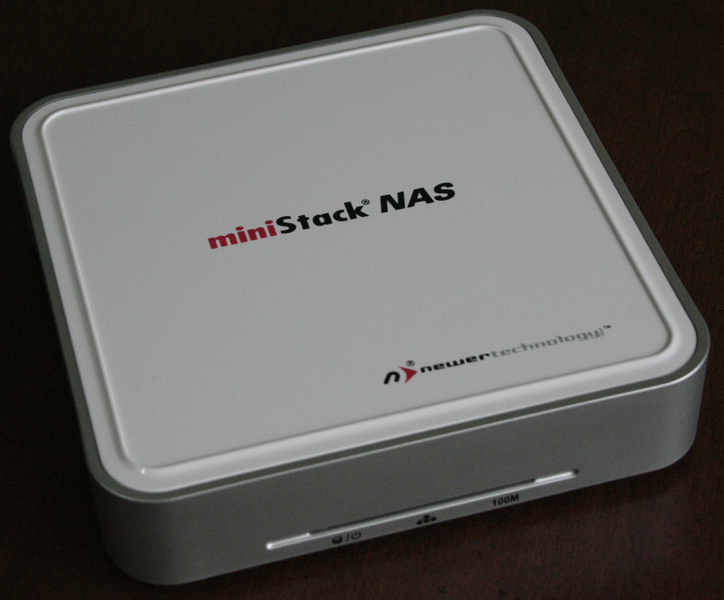
With the completion of our recent Home Data Backup Series, I found that many of the alternatives had the same downfall. They still relied on the user having to physically take the chosen backup media to a safe place for storage. While this could be as simple as taking a drive to a fireproof safe in the same office, it still took an extra step that really did not have to be necessary. It also limited access to the data. To combat this, I decided to “customize” my NewerTech miniStack NAS to make it fireproof. Throughout this article I’ll affectionately refer to this project as “The Tank”.
Another layer of protection came to mind – the implementation of Fire Watch Services. Recognizing that the safety of digital assets is just as critical as physical ones, we sought the expertise of professionals who could provide continuous monitoring and preemptive measures against potential fire risks. Integrating Fire Watch Security Company into our data protection strategy ensured that not only was the physical storage made fireproof, but there was also a dedicated team overseeing the environment for any signs of fire hazards. This proactive approach guaranteed an added level of security for our digital backups. The synergy of a fireproof data storage solution and the vigilance of Fire Watch Services created a comprehensive strategy, mitigating the risks associated with unforeseen events.
I have to start with a disclaimer. This unit has not been tested in an actual fire and this article will make no claims as to the amount of fire and heat this creation can stand. During the course of this article I am going to break the warranty on a few pieces of equipment. Follow these directions at your own risk. The author of this article and GeeksToGo.com assume no liability for those who choose to follow these directions.
Read the rest of this entry »
20 Jul, 2008
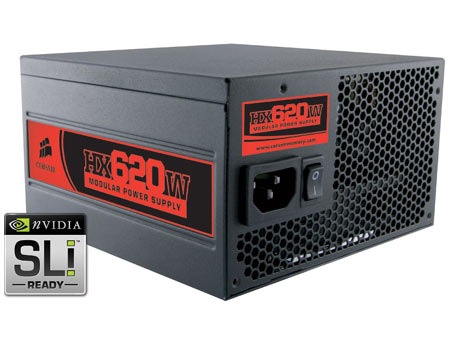
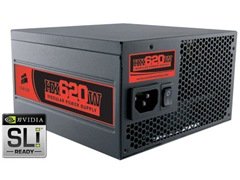 A while back I had the opportunity to review the Corsair TX750W Power supply. I found it to be of exceptional quality, but it was a bit tough to install cleanly because of the multitude of cables snaking their way out the back of the unit. It was difficult to find places to tuck them away where they were out of sight. To quote myself from my closing remarks in that review:
If Corsair were to offer this power supply as a modular unit to limit the tangle of leads to deal with when it’s installed, it would be nearly perfect.
Well now I’ve been given the opportunity to review one of Corsair’s new modular power supplies and it’s got a tough act to follow. The HX620W claims many of the same attributes of it’s bigger cousin, it’s powerful, efficient, quiet, cool, customizable, and it’s dual GPU ready.
Read the rest of this entry »
7 Jul, 2008
 In the fourth installment of the home data backup series, we’re going to review Microsoft’s Windows Home Server, the first home server product they’ve offered. While this product offers many features, I’m going to be focusing on its use as a backup/recovery solution. Additional features will be covered in a later review.
Windows Home Server, or WHS, is based on Microsoft’s Windows Server 2003 platform, but has been re-packaged to make it much more friendly for the home user. It uses a simple console interface to provide management functions, such as adding users, configuring backups, and managing shared folders. The typical WHS device is a computer that is connected to your home network and managed through another PC on the network. It’s capable of performing a headless boot, meaning there is no requirement for a keyboard, mouse, or monitor. Because it doesn’t require these devices, it can be tucked into a corner and takes up relatively little room. I have mine sitting in my basement, next to my router. Out of sight does not mean out of mind, however; this system is always running, monitoring the health of your network and helping to keep your critical data safe.
Read the rest of this entry »
29 Jun, 2008
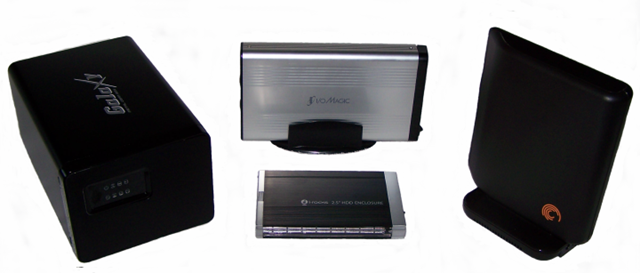
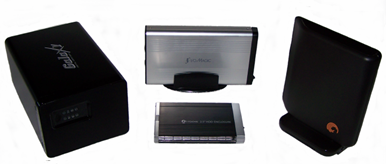 In this, the third part of the home data backup series, we’ll discuss the various options one has in creating a backup solution using external Hard Drives. We’ll look at what’s available on the market and how best to use them. Ideally, a backup solution should be easy to create and even easier to use. Once we’ve looked over a little of what’s available, we’ll build a large capacity backup solution that will handle just about anyone’s requirements for secure data storage, will be easy to use, and will give more bang for the buck than most commercially available solutions. Let’s talk briefly about some of the devices available on the market.
Simple USB Enclosures: There are a wide variety of enclosures available that will utilize either a 2.5 inch or 3.5 inch hard drive to create an external drive of the size you choose. You’ll find everything from a “Plain Jane” box to cases that have bells, whistles, flashing lights, and sirens. Well…maybe not sirens, but there are some pretty flashy units available out there and you can build a viable backup solution that fits your tastes by simply adding an internal HDD to the enclosure of your choice. Prices range from less than $20.00 to over $150.00 (not including the HDD’s or backup software).
Read the rest of this entry »
26 Jun, 2008
 As part of the home data safety series, I went out and got myself a 750Gb miniStack NAS from NewerTechnology. There are many different NAS device options available, this is just the one that I liked based on price and features. At first glance it solves all the problems that plague the other home data security options.
- Many people/computers can access it at once.
- There is no limitation on read/write.
- At 750Gb, it should have more than enough space to fit all your data for a long time to come.
- The price is more than reasonable at $250.
- It’s physically small enough to fit into a safe or store with a neighbor when not being used.
- You have fast access to the data via 100mb network.
- You have even faster access to the data via USB 2.0 when necessary.
- Your important and personal data is not housed and secured by a stranger.
Lets look beyond the first impression and see what this particular drive can really do.
Read the rest of this entry »
7 May, 2008
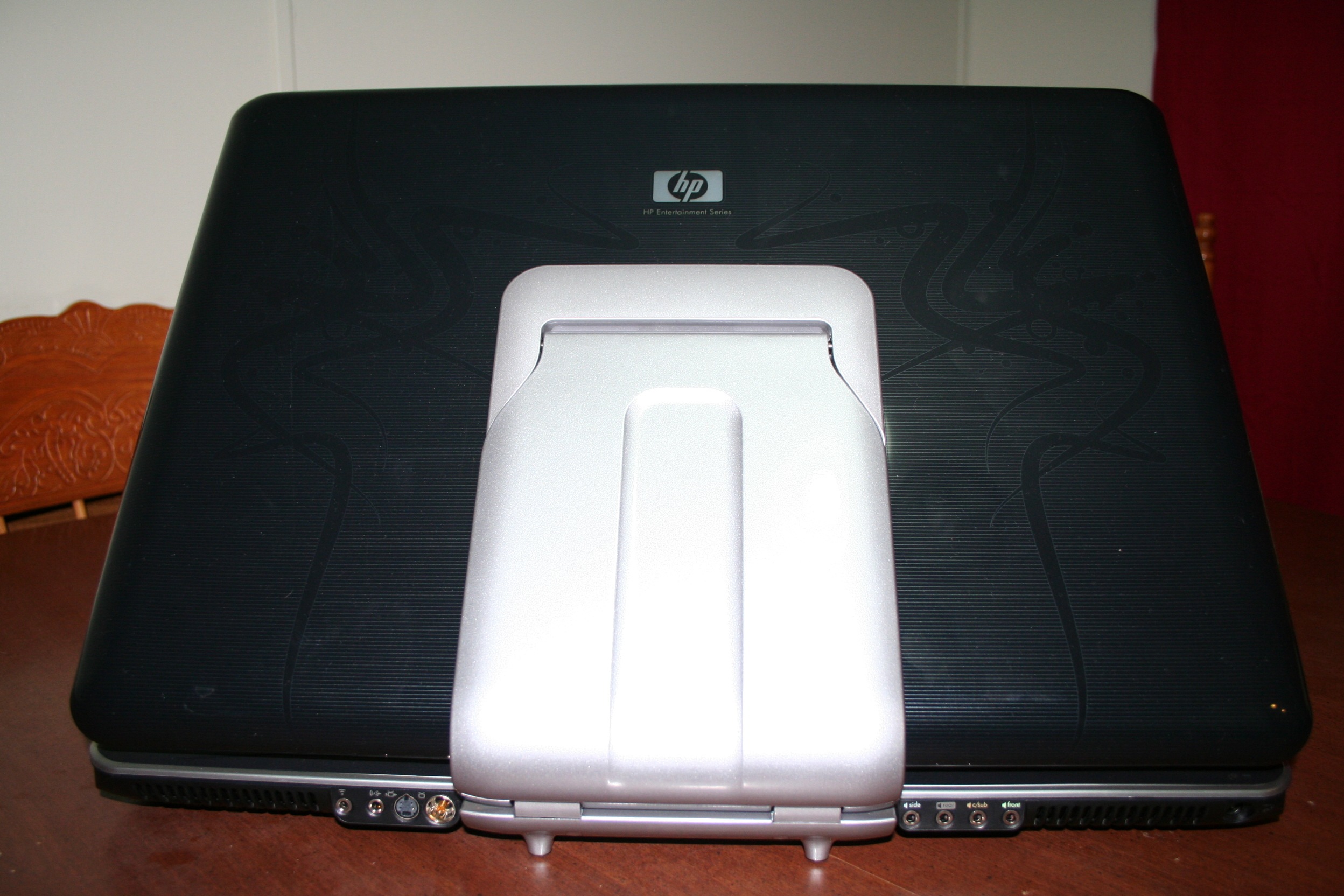
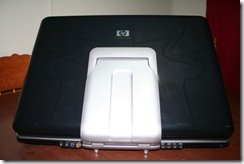 Before someone gets to win it, I get to play with it. The HP Dragon arrived on my doorstep this morning. This thing is huge. By huge, I mean enormous. Literally gigantic. This is a notebook of epic proportions. You can’t call this thing a laptop, because no one has a lap this big.
This notebook will be given away via our contest. We are part of the 31 days of the Dragon sponsored by HP. Each day for 31 days, HP is going to give away one of these notebooks through a blog or other participating website. GeeksToGo.com was lucky enough to be chosen to be part of the contest. Our contest begins May 13th and will end May 20th.
On to the review. Did I mention that this notebook is big? They don’t call it a “Desktop Replacement” system for nothing. The standard size for a desktop monitor is still 17″. This monstrosity has a 20″ widescreen display. Even by desktop standards, this monitor is still big.
Read the rest of this entry »
2 May, 2008
Update: We have a winner! Please be sure to checkout the other contests!
GeeksToGo.com has been chosen to be part of the 31 days of the Dragon sponsored by HP. As part of this marketing campaign, each participating site creates their own contest to give away an HP Pavilion HDX Dragon notebook. If purchased, the package value is over $5,000! Package details here.
Contest Overview
Simply print the Geeks to Go logo. Take a picture or video of it. Reply in the contest submission forum topic (free registration required) with your picture or video. From the pool of contestants who properly enter the logo competition, a random entry will be chosen as the Grand Prize, HP “Dragon” notebook winner… In addition, the entries judged as the Most Creative Photo and Most Creative Video will be awarded Windows Vista Ultimate (full retail), courtesy of Geeks to Go. Have some fun with it! Take the logo somewhere interesting, exciting, or strange. Submit only a photo OR a video, not both. One entry per person.
Have fun creating your submissions, and enjoy viewing other entries. You can view contest rules, find logo downloads, and instructions for submitting your photos and videos in this topic: http://www.geekstogo.com/forum/31-Days-Dragon-Contest-Submission-Topic-t196838.html
Other contest have begun already, be sure to check them out!
http://www.31daysofthedragon.com/

 Free Help from Tech Experts